
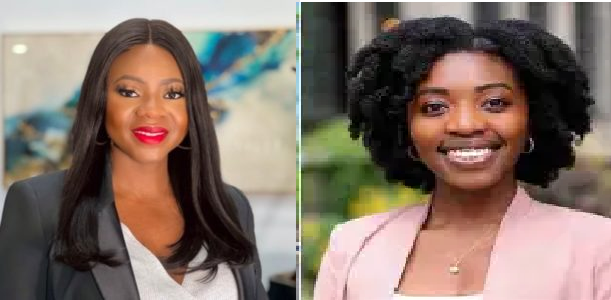
Across Canada, a new generation of immigrant innovators is redefining what leadership looks like in science, medicine, and technology. Among them are two young but remarkable Nigerian Canadian trailblazers—Adeola Olubamiji and Chika Stacy Oriuwa. With work spanning cutting-edge manufacturing and transformative healthcare advocacy, these two are contributing not only to social progress but also to the innovation economy that powers modern Canada.
From modest beginnings in Nigeria to global technology leadership— a journey which reflects both resilience and scientific ambition, Olubamiji has become one of the leading voices in additive manufacturing, commonly known as 3D printing. Her journey—.After moving to Canada, she made history in 2017 by becoming the first Black person to earn a PhD in Biomedical Engineering from the University of Saskatchewan. Her doctoral research focused on using 3D printing to develop biomedical materials such as cartilage, demonstrating how technology could transform healthcare and manufacturing. Today, Olubamiji works at the forefront of industrial innovation.
The implications for Canada’s economy are significant. Advanced manufacturing technologies like 3D printing allow companies to design lighter components, accelerate prototyping, and maintain global competitiveness in sectors ranging from aerospace to automotive and healthcare. Olubamiji’s im
Chika Stacy Oriuwa the physician helping to transform Canada’s Healthcare Conversation, first captured national attention in 2020 when she became the first Black woman to serve as the sole valedictorian of the Faculty of Medicine at the University of Toronto.
Now a physician and psychiatry resident, Oriuwa has become one of Canada’s most visible advocates for equitable healthcare and representation in medicine. Her work addresses systemic barriers that affect Black patients and minority communities—issues that have long influenced health outcomes and access to care. In addition to practicing medicine, Oriuwa is a writer, poet, and public speaker who uses storytelling to address racism in healthcare and to encourage inclusive medical training.