WASHINGTON — The federal government is looking for researchers who can help improve how America educates children with disabilities—and it wants more voices and experiences represented in that work. The U.S. Department of Education’s National Center for Special Education Research (NCSER) is accepting applications for its Research Training Programs in Special Education, an initiative designed to develop researchers working in special education and early intervention. Applications are due October 1, 2026, at 11:59:59 p.m. ET, with successful projects potentially beginning between July 1 and September 1, 2027.

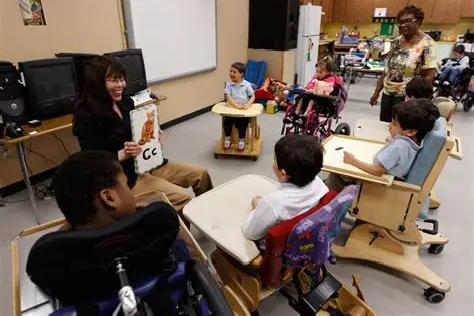
For immigrant families, this may initially sound like an announcement intended for professors with impressive resumes and offices containing suspicious quantities of books. Technically, it is. But what happens in those offices can eventually reach classrooms. Research helps shape how schools identify disabilities, evaluate interventions, train educators and determine which approaches work for children needing additional support. For America’s increasingly diverse student population, who conducts that research—and which questions they consider worth asking—can matter.
NCSER says it wants research addressing significant educational challenges affecting children with disabilities or those at risk. It also wants to broaden the special education research workforce by developing researchers with different backgrounds, perspectives and experiences. That goal is relevant for immigrant and New American communities, where families may be navigating disability, language differences, unfamiliar school systems and cultural attitudes toward special education simultaneously. Researchers who understand those experiences can help broaden the questions being asked about how diverse families encounter America’s special education system.
The initiative supports three major programs. The Early Career Development and Mentoring in Special Education program supports researchers at universities and non-academic research organizations who are building careers studying learners with or at risk for disabilities. Funding can support research, professional development, mentoring and salary for protected research time. Investigators at colleges and universities that are not classified as R1 institutions may also request additional funding for grant administration and management.
In other words, Washington appears to recognize one of academia’s enduring truths: having a brilliant research idea and having an institution equipped to survive federal grant paperwork are two entirely different achievements. The Methods Training for Special Education Research program helps current education researchers strengthen skills in study design, data analysis and translating research findings into information educators and practitioners can use.
The Postdoctoral Research Training Program in Special Education and Early Intervention supports university programs preparing doctoral-level researchers to conduct independent research, evaluate educational interventions and develop assessments and other tools for children with or at risk for disabilities.
Who can apply: For the Early Career program, funding goes to the researcher’s institution rather than directly to an individual. Eligible organizations include U.S.-based colleges and universities, nonprofit and for-profit research organizations, and public and private agencies capable of conducting rigorous research. For Methods Training, applicants must be U.S.-based organizations capable of providing training in scientific research methods. Institutions can submit multiple substantially different applications without overlapping key personnel.
The immediate beneficiaries may be researchers and institutions, but the longer-term stakes extend well beyond academia. For colleges serving immigrant, first-generation and historically underrepresented students, the opportunity is not simply another federal grant competition. It is also a chance to expand who enters the research pipeline—and eventually who helps produce the evidence influencing America’s classrooms.
This grant opportunity comes at the heels of another opportunity known as Expanding Career Pathways and Workforce Readiness of Special Education Teachers and Early Intervention Personnel Through Registered Apprenticeships competition, which focused on funding cooperative agreements that support registered apprenticeship programs that attract, prepare, and retain special education teachers or early intervention personnel.
Deadline: October 1, 2026, 11:59:59 p.m. ET
Potential start: July 1–September 1, 2027
Program: Research Training Programs in Special Education