
The American dream, it turns out, sometimes comes with a campaign button, the boldness to belong and to also participate, even with an unfamiliar surname.
For generations, immigrants have arrived in America seeking opportunity. Increasingly, their children—and immigrants themselves—are seeking something else: a voice in governing the country they call home.
The November 3 midterm elections delivered a striking illustration and offers a glimpse of this emerging trend. Across the country, candidates born abroad and Americans whose parents came from Africa, Asia, Latin America and elsewhere won races for Congress, state legislatures and local offices.
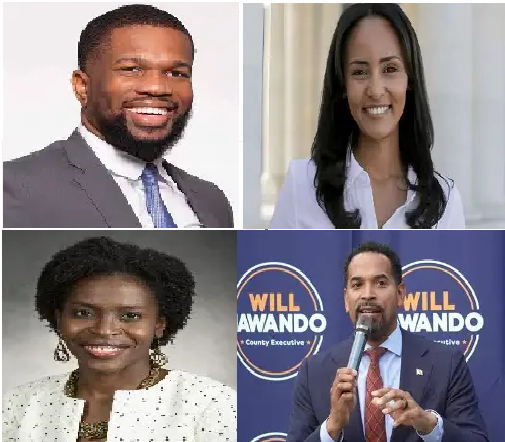
Winners in the November 3 election winners, included 14 Nigerian Americans. Their victories signal a growing presence in American public life—and new opportunities for immigrant civic engagement.
Among those elected are Will Jawando, elected Montgomery County executive in Maryland; Junior Ezeonu, elected to the Texas House; Esther Agbaje in Minnesota; and Gabe Okoye in Georgia.
But Nigeria was hardly alone.
From Africa Roots to Capitol Hill
.Kenyan-born Huldah Momanyi-Hiltsley secured another term in Minnesota’s House, and Liberian-born Naquetta Ricks won reelection in Colorado.
Other reported victories included Ethiopian-born Melat Kiros in Colorado, Ghanaian-American Adrian Boafo in Maryland, and Abdul El-Sayed, the son of Egyptian immigrants, in Michigan’s U.S. Senate race.
Their biographies reflect different journeys: refugees, naturalized citizens, immigrants who arrived as children, and Americans whose connections to ancestral homelands were inherited rather than experienced through migration.
The American Dream Enters the Legislature
The story extends beyond Africa.
Adam Hamawy, who immigrated from Egypt as an infant, won a congressional seat in New Jersey. Pia Dandiya, the daughter of Indian immigrants, won a House seat in Florida. Filipino American politicians also recorded victories, including California Attorney General Rob Bonta.
These successes do not establish a single immigrant political agenda. Candidates differ in background, ideology, priorities and the communities they represent.
But collectively, they challenge an enduring assumption that immigrants belong mainly in America’s workforce, rather than its governing institutions.

For immigrant families, political representation can inspire civic participation and broaden conversations about education, healthcare, housing, entrepreneurship and equal opportunity.
For the next generation, it offers a lesson: celebrating ancestral roots and embracing American citizenship need not be competing commitments.
The Nigerian proverb says a child who washes their hands can dine with elders. Across America’s political institutions, descendants of immigrants are increasingly pulling up chairs.