
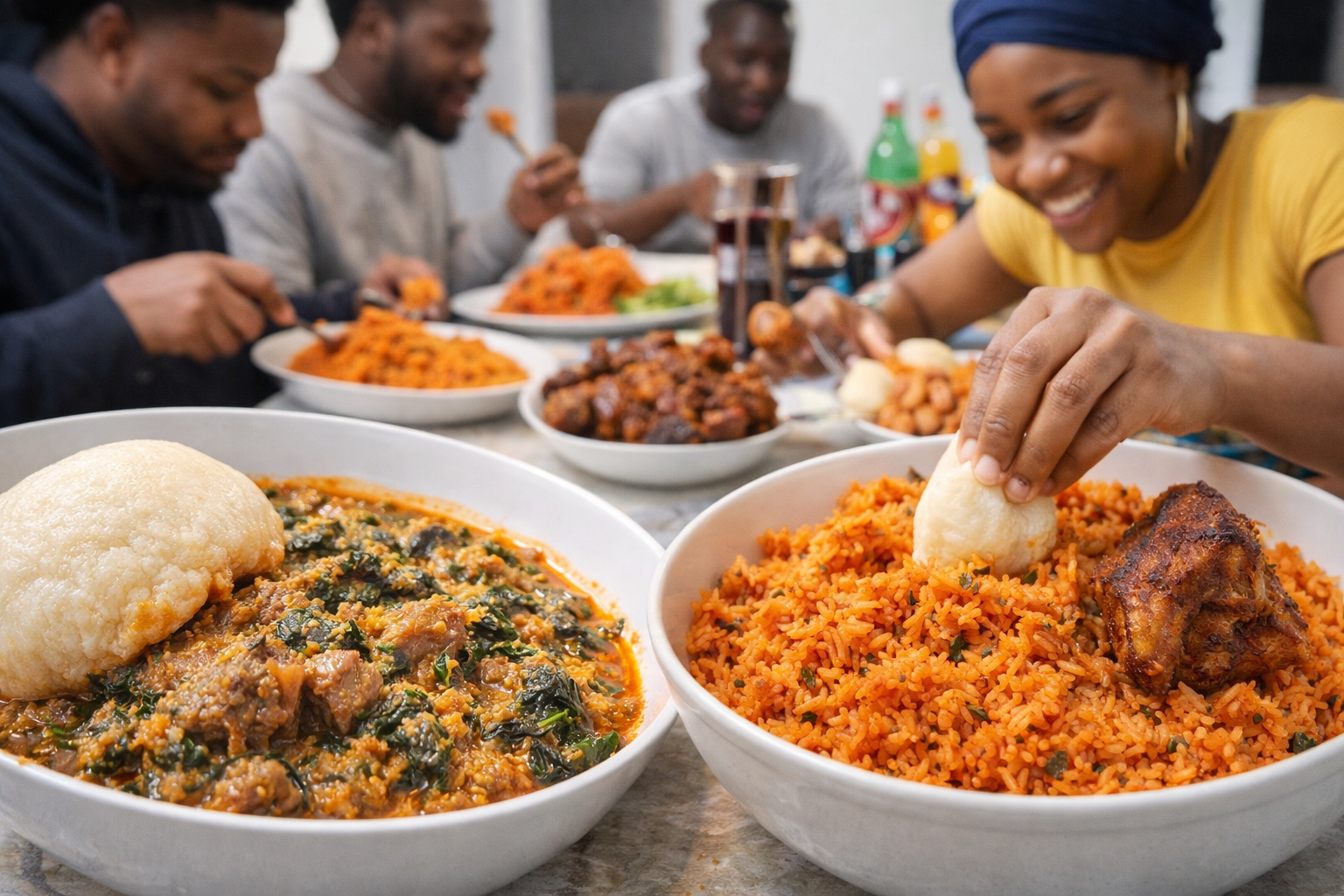
On a recent Saturday night in Brooklyn, a pot of steaming Jollof Rice sat at the center of a crowded apartment kitchen, its smoky tomato aroma filling the room. Guests hovered nearby, paper plates ready, while someone asked the inevitable question: “Is this Nigerian or Ghanaian Jollof?” The debate—playful but serious—has become part of the ritual.
A decade ago, dishes like Egusi Soup and Jollof rice were mostly found in Nigerian households or a handful of West African restaurants scattered across major cities. Today, they have become fixtures of the North American food scene, embraced by Millennials and Gen Z who are eager for bold flavors and authentic global cuisine.
Part of the rise has come through the everyday rituals of diaspora life. Nigerian birthday parties, weddings, and “owambe” celebrations have long featured large trays of Jollof rice alongside thick bowls of egusi soup—made with ground melon seeds, leafy greens, and richly seasoned meats. Younger guests grew up with these dishes, then carried them into dorm rooms, shared apartments, and social media feeds.
Soon the dishes began traveling beyond the diaspora. In cities like Toronto, Houston, Hyattsville, Atlanta, Columbus and Minneapolis, West African restaurants now appear in shopping malls, food halls, and fast-casual dining strips, where curious diners discover the fiery orange rice and nutty soups for the first time. Delivery apps such as Uber Eats and DoorDash have accelerated the trend, bringing Nigerian meals to apartment doors late into the night.
Social media has done the rest. Videos of cooks stirring giant pots of Jollof or scooping egusi with pounded yam circulate widely on TikTok and Instagram, where food influencers frame the dishes as both comfort food and cultural statement. Caucasians love these Nigerian dishes too….they may tell you it’s spicy as water welled up in the corner of their eyes but they’ll go back for seconds and tell you in the next breath that it’s finger licking good.
Celebrities have also joined the chorus. In interviews and online posts, stars like Burna Boy—a global ambassador for Afrobeats culture—regularly celebrates Nigerian cuisine while touring North America. Hollywood actor Michael B. Jordan once joked in an interview about discovering Jollof rice through friends in the African diaspora, while rapper Cardi B famously praised the dish on social media after tasting it at a Nigerian gathering. She reportedly said she wanted to visit Nigeria to “see the real Nigeria and eat jollof rice.” Her comment went viral and helped introduce the dish to millions of fans online.
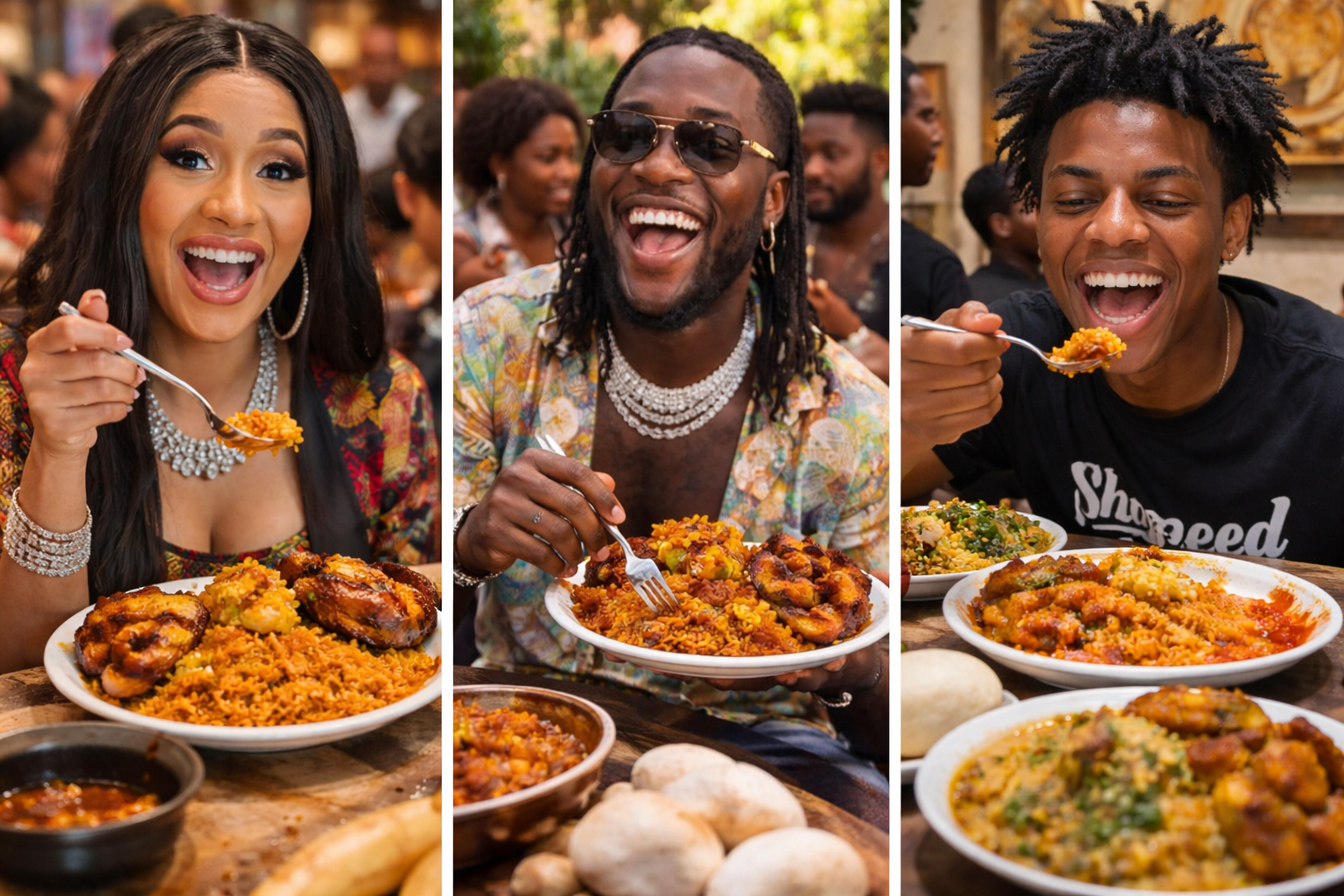
For younger diners, the appeal goes beyond celebrity endorsements. Jollof rice carries a smoky sweetness from tomatoes, peppers, and spices that feels both familiar and exotic, while egusi soup offers a rich, nutty depth rarely found in Western stews. Togeth
That story is cultural as much as culinary. Nigerian food represents migration, community, and a generation raised between continents. When a pot of Jollof appears at a college party in Chicago or Vancouver, it becomes more than food—it becomes an invitation into a shared cultural moment. Tope, the owner of Tope Anderson Kitchen in Dayton Ohio confessed that sales volume has increased with carry-out orders and the introduction of a food truck at festivals and community events.
For many young North Americans, the question is no longer whether they’ve heard of Jollof or Egusi. The question now is simply: Who made it—and can I get seconds?