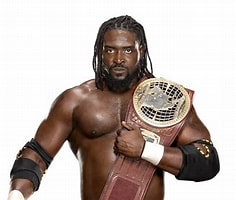
On the night of March 13, 2026, beneath the bright, theatrical lights of WrestleMania 42 Night 2 in Las Vegas, A Nigerian born wrestler, Oba Femi made history by defeating Brock Lesnar in a star‑making main event wrestling ring, Despite Lesnar’s initial aggression, Femi absorbed the punishment and moved with a kind of controlled spectacle—part athlete, part storyteller, wholly at ease in a space that, not long ago, few would have associated with African-born talent. Thousands of miles away, in the octagonal theater of mixed martial arts, Israel Adesanya has spent years doing something similar: redefining expectations, one performance at a time.
Taken together, their careers hint at something larger than individual success. They suggest a quiet but unmistakable shift in the global imagination of African athleticism.
For decades, the narrative has been narrowly drawn. African athletes—particularly Nigerians—were celebrated, but within familiar lanes: sprinting tracks, football/ soccer pitches, long-distance running routes. Strength and speed, yes; but within predefined borders. The idea that African-born athletes might dominate in arenas like professional wrestling or mixed martial arts—sports as much about persona, branding, and global entertainment as they are about physical ability—rarely entered the mainstream conversation.
And yet, here they are.


Femi’s rise within WWE is not just about power; it is about presence. Professional wrestling, after all, is a performance medium. It demands choreography, timing, and an instinct for spectacle. To succeed is to understand narrative as much as technique. In that sense, Femi’s ascent reflects a broader generation of African athletes who are as comfortable crafting identity as they are delivering impact.
Adesanya, by contrast, has long operated at the intersection of sport and art. His fighting style—fluid, almost cinematic—draws from disciplines as varied as kickboxing, dance, and anime-inspired imagination. In the UFC, he became not just a champion, but a curator of his own mythology, blending Lagos roots with global influences in a way that feels entirely contemporary.
What connects them is not merely nationality, but timing. They belong to a generation shaped by migration, media, and multiplicity. Raised between cultures or moving across them, they have absorbed influences that extend far beyond traditional expectations. The result is a kind of athletic hybridity—one that resists easy categorization.
This shift is visible beyond the ring and the octagon. Across sports once considered peripheral to African participation—skateboarding, mixed martial arts, even winter sports—new names are emerging, challenging the old assumptions about who belongs where.
As plans gear up for the White House to host its first professional mixed martial arts event, UFC Freedom 250, on June 14, 2026, featuring wrestling and MMA bouts on the South Lawn. There is, in this moment, a redefinition underway. Not just that the White House will be the venue of a martial arts spectacle but also that African athletes are entering new spaces for the first time, and doing so with visibility, confidence, and, increasingly, dominance.
In the end, what Oba Femi and Israel Adesanya represent is not just excellence. It is expansion. The boundaries, it turns out, were never fixed.