
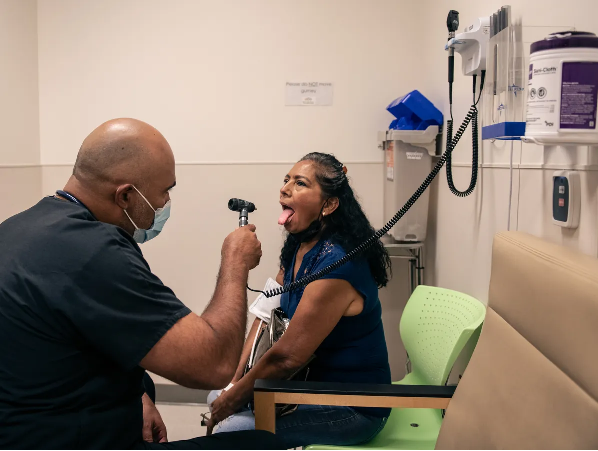
WASHINGTON , DC — For many Nigerians in America, October 1 usually comes dressed in green and white—the colors of a homeland celebrating independence from British colonial rule. But this year, the jollof rice and Independence Day festivities may come with a less celebratory side dish: uncertainty over health insurance. Across America, thousands of immigrants are confronting new federal rules that could determine whether they keep their health coverage.
A provision of H.R. 1—the congressional bill and-spending legislation commonly called the One Big Beautiful Bill Act, signed into law July 4, 2025—takes effect today, sharply narrowing which non-citizens can receive federally funded Medicaid and Children’s Health Insurance Program coverage. Among those affected are people America legally admitted because they were escaping some of life’s worst circumstances: refugees, asylees, humanitarian parolees, trafficking survivors and some victims of domestic violence.
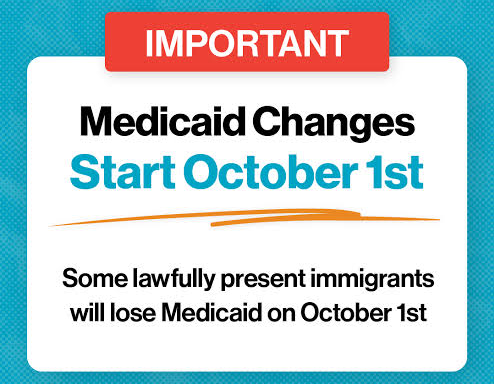
Undocumented immigrants were already generally barred from federally funded Medicaid. This new round reaches people who are lawfully present. That distinction matters in immigrant communities from Houston, TX and Chicago, IL to St. Paul, MN ,and cities across the country , where “legal immigrant” has sometimes become one enormous political suitcase into which very different immigration statuses are casually packed.
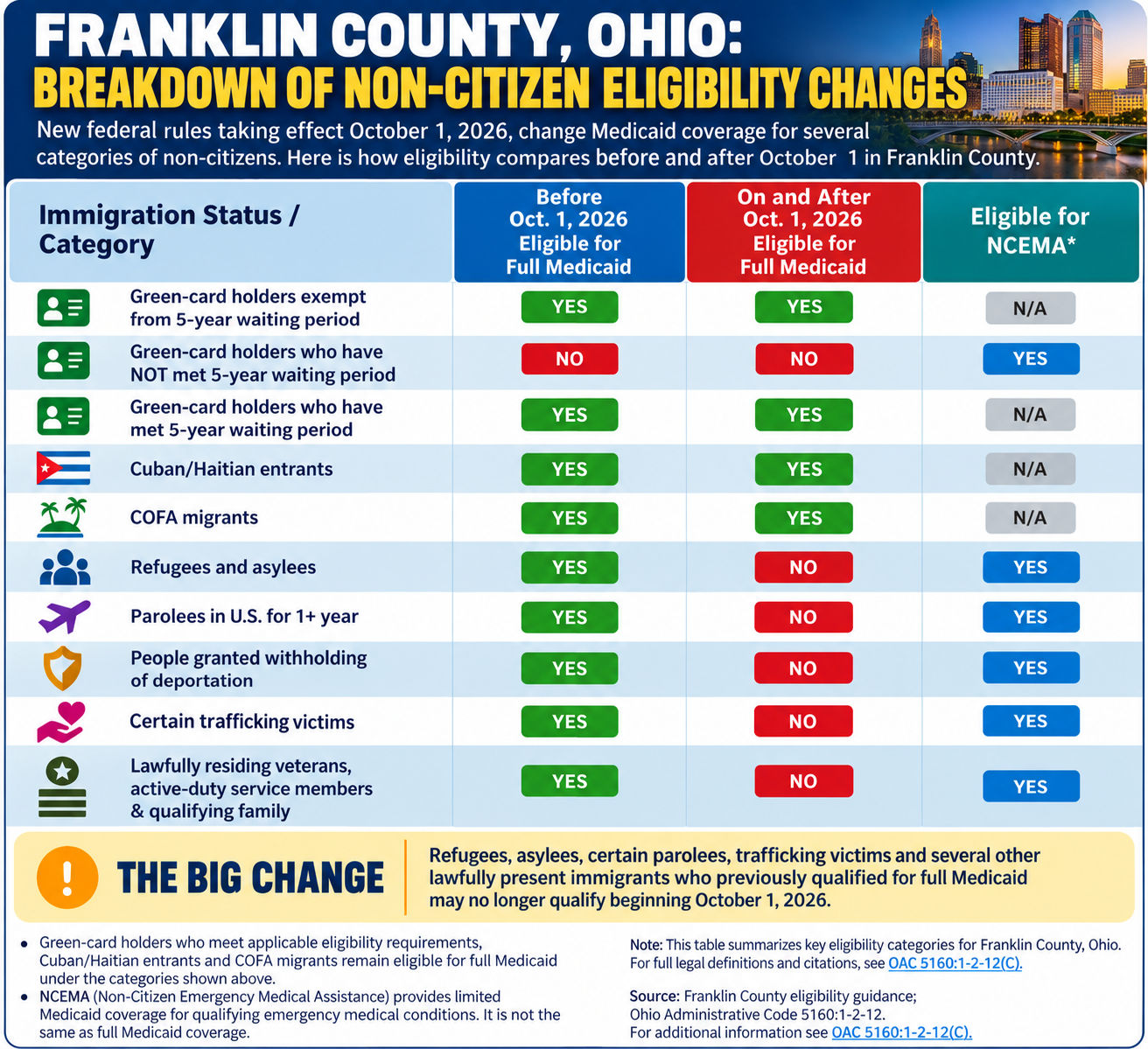
Under the new rules, federally funded Medicaid eligibility generally remains available to qualifying green-card holders, Cuban and Haitian entrants and migrants covered by the Compact of Free Association. Important exceptions also remain for certain lawfully residing children and pregnant women. Emergency Medicaid remains available for qualifying emergency medical conditions.
The change according to the estimate of The Congressional Budget Office would leave about100,000 more people uninsured. In Ohio, the impact is already difficult to count. The Ohio Department of Medicaid has identified at least 3,500 people losing full coverage and another 3,000 who may be affected. Franklin County, home to Columbus and one of Ohio’s largest immigrant communities, estimates triple that number of people could lose coverage, although county officials caution that the estimate is uncertain. Checks by African Metro News show that starting October 1, 2026, lawful immigrants, refugees, and non-citizens with special humanitarian status in Franklin County, Ohio, are losing regular Medicaid eligibility unless they hold a green card with a completed 5-year waiting period or qualify for an exemption.
For immigrant families in Dayton and elsewhere in Ohio, the new rule means immigration paperwork can now determine not only whether someone may remain in America, but whether a routine doctor’s appointment comes with an insurance card.
Minnesota faces the same federal deadline. Beginning October 1, many non-pregnant immigrant adults 21 and older—including refugees, asylees and some Afghan and Ukrainian humanitarian parolees—lose eligibility for the state’s federally funded Medical Assistance program.
New York offers a striking contrast. Federal Medicaid funding also stops there for affected refugees and asylees, but New York says state law will keep them insured—with Albany picking up the bill Washington no longer pays.
And that may be the larger story of October 1. Congress changed one federal rule. What happens next depends partly on where an immigrant lives, what immigration document sits in the family drawer, and whether a state is willing—or able—to spend its own money. For an immigrant family deciding whether it can still afford the next doctor’s visit, the arithmetic is considerably more personal.