
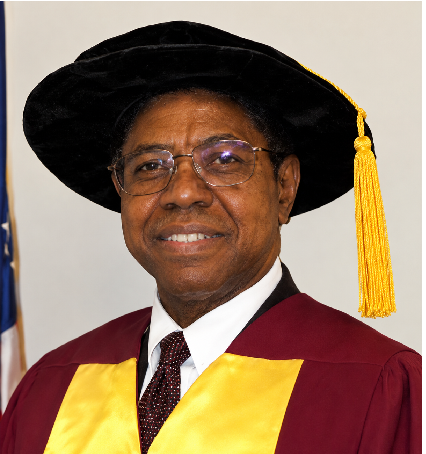
Long before artificial intelligence became everyone’s favorite dinner-table argument, Nigerian-born engineering scholar Dr. Adedeji B. Badiru was building an AI laboratory at the University of Oklahoma. He later became dean of the Graduate School of Engineering and Management at the Air Force Institute of Technology, serving for a decade. An author, innovator and mentor, Badiru believes professional success depends less on impressive titles than on adaptability, collaboration and helping others succeed. In this inaugural AMN Expert Voices interview, he discusses immigrant ambition, America’s innovation economy, the future of AI and why talent, without opportunity, remains an unfinished equation
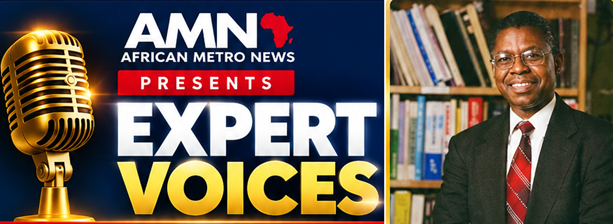
In the first installment of African Metro News’ Expert Voices series, Badiru reflects on professional relationships, institutional leadership, unconventional thinking and why success means more to him when others share in it. his initial interview transcript below has been edited for clarity and length.
AMN: Question 1 — The journey to leadership
African Metro News: From your early education to becoming Dean of a prestigious American military graduate institution, what experiences shaped your journey, and what did you have to overcome along the way? Looking back, what opportunities or decisions made the greatest difference?
Dr. Badiru: What has mattered most throughout my professional journey is my ability to connect with people through engagement, collaboration and social relationships. My colleagues, friends and mentors have been enormously important. When the dean’s position opened at AFIT in 2013, I was heading the Department of Systems Engineering. There were six academic departments, and I was one of the six department heads.
We expected an external candidate to be appointed. I had no intention of applying. Then Dr. Nat Davis, who headed Electrical Engineering, came to my office and told me that my colleagues wanted me to become their next leader. I was surprised. I explained that my department was making progress and I did not want to abandon it. But he assured me that the other department heads supported me. That changed everything.
“They were all white, yet they supported me, a Black immigrant, for the institution’s leadership. For me, this was an affirmation of professional trust.”
— Dr. Adedeji B. Badiru
Some colleagues had worked at AFIT for decades, while I was relatively new. They were all white, yet they supported me, a Black immigrant, for the institution’s leadership. For me, this was an affirmation of professional trust. I have always encouraged people to let their work speak for them. When colleagues recognize your contribution and invite you to lead, you should be willing to accept the challenge. I applied, received the appointment and served ten productive years as dean with my colleagues’ support.
AMN: Question 2 — Breaking institutional barriers
African Metro News: You have spent decades in American higher education and held leadership positions at the University of Oklahoma, the University of Tennessee and AFIT. What does your experience reveal about the opportunities and obstacles facing African-born professionals seeking leadership positions in American institutions?
Dr. Badiru: Immigrants bring different perspectives to institutional challenges. Our experiences and cultural values can help us approach familiar problems in unconventional ways, particularly when combined with empathy, respect and a willingness to do the work. At the University of Oklahoma, despite initial discouragement, I established what I describe as the state’s first artificial intelligence laboratory in the mid-1980s. Our work in AI and expert systems created opportunities for further research.
When I arrived at the University of Tennessee in 2000, I proposed a new doctoral program in Industrial and Information Engineering. There was resistance because Tennessee had not approved a new PhD program in approximately twenty years. I believed the research opportunities associated with nearby Oak Ridge National Laboratory justified the proposal. We pursued approval, and the program was established.
“Success, to me, is seeing the excitement and satisfaction of students and colleagues when we work together to solve a problem.”
— Dr. Adedeji B. Badiru
At AFIT, one of my early initiatives as dean was to introduce electronic theses and dissertations in an institution accustomed to paper-based procedures. Some doubted that the change would work. But with the support of my staff, we implemented it successfully. These experiences demonstrate how immigrants can contribute fresh ideas and practical solutions to established institutions. The important thing is to recognize an opportunity, develop a credible solution and be prepared to act.
AMN: Question 3 — Defining success
African Metro News: Your career includes numerous professional honors, academic publications and leadership responsibilities. But beyond awards and titles, how do you personally define success—and has that definition changed over the years?
Dr. Badiru: I approach life positively and try to recognize opportunities even in difficult circumstances. I believe that a 70 percent solution is better than making no attempt at all. Success, to me, is seeing the excitement and satisfaction of students and colleagues when we work together to solve a problem. It is not simply about my personal accomplishments. It is about creating something that others can build upon. In the classroom, I consider myself something of an entertainer. You must capture people’s attention before you can help them understand and apply what they learn.

I often use the familiar teaching principle attributed to Confucius: telling someone may lead to forgetting, showing someone encourages remembering, but involving someone produces understanding. That philosophy has remained consistent throughout my career. I also draw upon Pareto’s distribution and Maslow’s hierarchy of needs in thinking about collaboration, performance and human motivation. Ultimately, my definition of success has not changed: it is rooted in working productively with people.
AMN: Question 4 — Advice for the next generation
African Metro News: Imagine a young African immigrant reading or watching this interview from Dayton, Columbus, Kentucky, Oklahoma, Tennessee, Lagos or Abuja—someone with enormous ambition but limited financial resources, few professional connections and considerable uncertainty about the future. What three decisions would you urge that person to make now, and what mistakes should they avoid?
Dr. Badiru: I receive requests for advice and mentorship frequently, including from young people I have never met. My first recommendation is to reach out and establish connections with experienced professionals.
Second, be specific about the assistance you need. Third, follow up on the advice you receive and let your mentor know about your progress. There are also mistakes to avoid. Be realistic about what a professional mentor can provide. Be brief and respectful of the person’s time. And do not begin a mentoring relationship by requesting financial assistance. One recent example involved a University of Lagos student who contacted me for access to educational materials. I shared resources that helped his research, and he later wrote to express his appreciation. That kind of feedback is personally rewarding. Mentorship is not necessarily about money or securing a job for someone. Sometimes, providing useful knowledge and encouragement can make an enormous difference