
America loves the story of the immigrant entrepreneur. Someone arrives with a suitcase, a dream and enough determination to work two jobs while building a third.
What America discusses less enthusiastically is what happens after that entrepreneur opens a business.
The customers arrive. The bills multiply. The bank wants financial projections. The owner wants to expand but doesn’t know whom to call.
Welcome to the American Dream, where ambition is free, but business advice can be remarkably expensive.
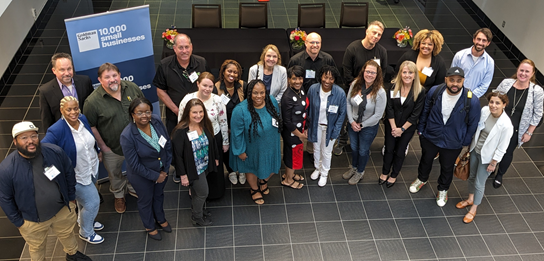
Yet in Southwest Ohio, Goldman Sachs 10,000 Small Businesses (10KSB) is offering something unusual: an intensive, tuition-free business education program designed to help established entrepreneurs grow.
In an October 26 exclusive interview with African Metro News, Kandise Bobo, executive director of the Dayton-region program, Valerie Beerbower, program manager, and Nicole D’Amico, alumni manager, three officials of Goldman Sachs 10,000 Small Businesses explain how a 15-week program is helping entrepreneurs, including immigrants overcome financial barriers, build networks and turn small businesses into growing enterprises
For immigrant and underserved business owners who may lack access to established commercial networks, the opportunity could be especially significant.

Executive MBA Experience in 15 Weeks
“Think of it as getting a speed executive-level MBA,” Beerbower told AMN.
“We’ve accelerated a 2-year program and shrunk it into a single semester.”
Delivered through Sinclair Community College, the 15-week program covers financial management, marketing, hiring, operations, forecasting and access to capital.
It is an MBA-style learning experience, not an accredited MBA degree.
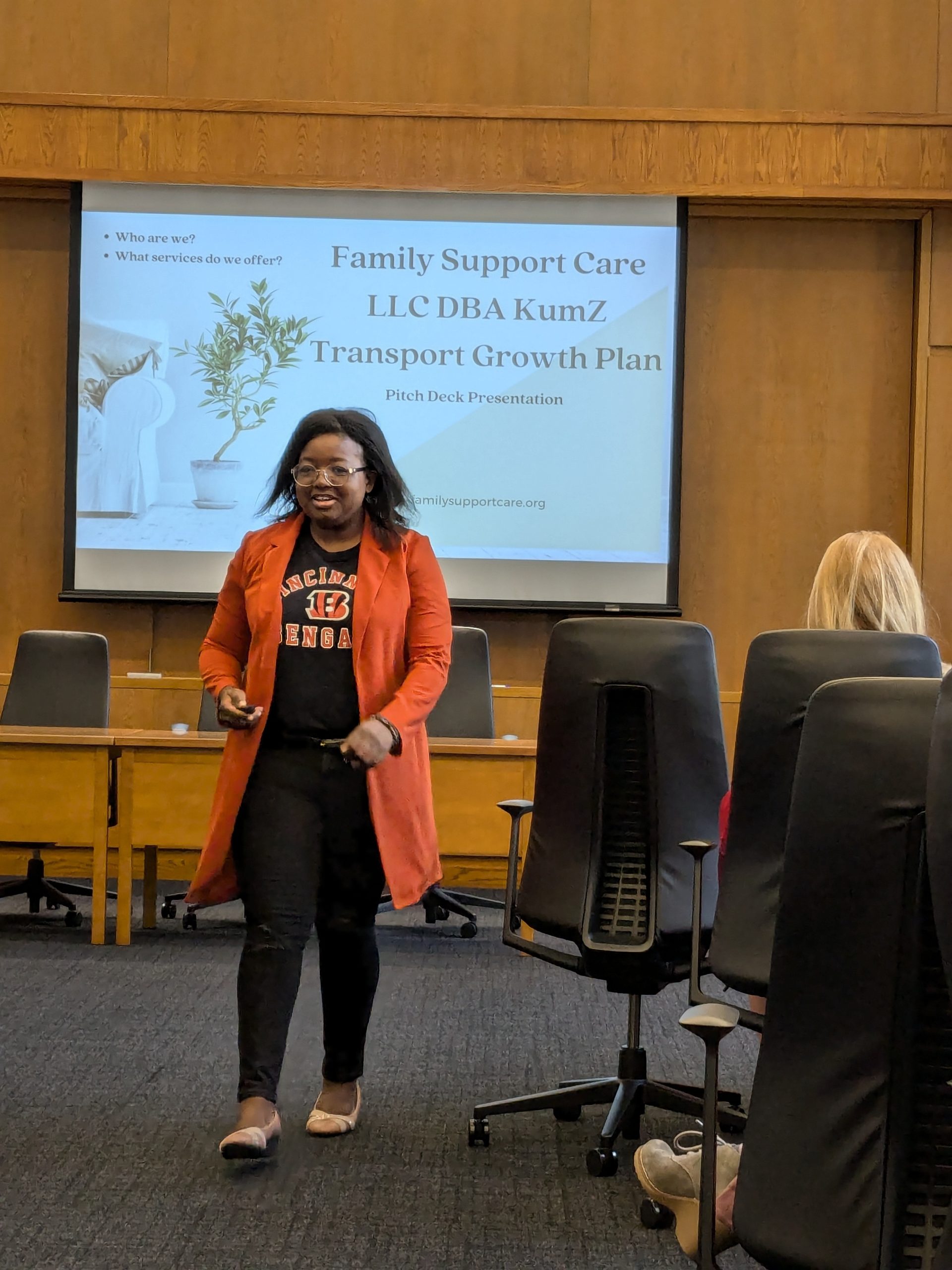
Participants develop a five-year growth plan and conclude with a three-minute presentation explaining how they intend to expand their businesses.
Beerbower emphasized that the curriculum is practical.
“We cover a lot of topics ranging from reading your financial statements, being able to make financial forecasts, being able to predict whether a growth opportunity or any opportunity that’s presented to you is going to be profitable or not.”
For entrepreneurs who have learned business management through trial and error, the program offers structured education without traditional graduate-school tuition.
Making Entrepreneurs Bankable
Kandise Bobo says the program’s central objective is helping business owners understand their growth ambitions and develop credible plans to achieve them.
“It’s really helping people understand all the elements that are necessary to be bankable,” she explained.
That distinction matters for immigrant entrepreneurs whose businesses may generate income but lack the financial documentation, professional relationships or strategic plans lenders expect.
Bobo cited Bahar Amrani, a local entrepreneur specializing in wedding gowns and alterations, as an example.
After completing the program, Amrani developed a strategy to move from leasing commercial space to owning property.
According to Bobo, she subsequently purchased a building in downtown Centerville, hired additional dressmakers and acquired an adjoining property accommodating other small businesses.
“Through her ambition, through all the learning she went through, it opened up possibilities, opportunities for others,” Bobo said.
The benefits, in other words, extended beyond one entrepreneur

Sometimes Networking Saves $40,000
D’Amico says graduation is only the beginning.
Program alumni remain connected through continuing education, professional relationships and a national network approaching 19,000 business owners.
She described how Tony Jones of Monopoly Men Construction, a Cincinnati entrepreneur attending the Dayton program, connected with fellow participant Sarah Fisher of Well Kept Bookkeeping.
According to D’Amico, Fisher’s review of Jones’s financial records revealed approximately $40,000 in tax overpayments.
That is networking with considerably more substance than exchanging business cards over coffee.
D’Amico also reported that program surveys indicate 71 percent of graduates experience business growth within 18 months.
Those figures represent program-reported outcomes rather than independently verified results.
What About Immigrant and Underserved Businesses?
Many immigrant and minority entrepreneurs arrive in America with experience, ambition and established businesses, yet often lack access to the networks, financing relationships and business education needed to expand.
How does Goldman Sachs 10,000 Small Businesses address these barriers, and what intentional efforts are being made to reach entrepreneurs who may not traditionally have access to such programs
The $75,000 Question: Opportunity Has an Entry Feed After All
There sems to be an uncomfortable irony in a program designed to help small businesses grow but says applicants must already demonstrate a certain level of success before they can receive that help.
The requirement of $75,000 in annual revenue, two years in business and at least two workers may make perfect financial sense on Wall Street, but it can look rather different from the counter of an immigrant-owned grocery store in Dayton or a family-run enterprise in Cincinnati
For many foreign-born entrepreneurs still navigating unfamiliar credit systems, limited capital and thin professional networks, these thresholds risk excluding precisely the businesses that could benefit most from the training. It raises an awkward question: Must entrepreneurs first prove they can swim before being offered swimming lessons?
To the program’s credit, Valerie Beerbower told AMN that applicants approaching $70,000 in revenue should still consider applying, and those who do not qualify can be referred to other business-support organizations.
Still, the larger question remains: How many promising immigrant entrepreneurs are being left outside the classroom because their businesses have not yet become successful enough to qualify for lessons in success?
Beerbower acknowledged that some entrepreneurs may not yet satisfy every eligibility requirement.
Generally, applicants must have operated a business for at least two years, generated $75,000 in annual revenue and have at least two workers, including the owner.
But entrepreneurs approaching the revenue threshold should not automatically exclude themselves.
“I would encourage them if they are hitting at least $70,000 to go ahead and apply,” Beerbower said.
“There’s no application fee or anything.”
Applicants who are not admitted may be connected with other regional organizations, including those supporting early-stage and immigrant-owned businesses.
“I’m always happy to connect people to the other service providers that are in our region,” she said.
That commitment could matter in communities where promising entrepreneurs often operate outside traditional business-support networks.
Artificial Intelligence, Expansion and the Next Opportunity
As technology, artificial intelligence and economic uncertainty reshape the small-business landscape, are these likely to become the greatest opportunities and threats facing entrepreneurs in Southwest Ohio? Kandise Bobo urged entrepreneurs to embrace artificial intelligence.
“I don’t look at AI as a threat,” she said, suggesting that the greater danger comes from competitors adopting technology while others stand still..
Asked if Goldman Sach is partnered with Sinclair Community College AI institute to leverage existing relationship to include AI in the 10KSB Curriculum. Bobo replied: ” Not necessarily Sinclair, but last week it was announced that, Goldman Sachs has expanded 10KSB”
” So, a $500 million investment, and it was an acknowledgment of, of AI’s impact on small business owners. over the months and years, they will— Goldman Sachs is committed because of that large investment to make sure that It’s incorporated into the curriculum and just figuring it out like everybody’s trying to figure out how, um, how we can expand the learning” she added.
Sinclair’s next cohort is scheduled to begin in May 2027, with an initial application deadline of January 22, 2027, according to Beerbower.
Similar programs operate through Columbus State Community College and Cincinnati State Technical and Community College.
For immigrant entrepreneurs across Southwest Ohio, the message is simple: building a business requires more than determination. It requires knowledge, relationships and a strategy for growth.
The American Dream may begin with a good idea. But keeping it alive sometimes requires learning how to read a balance sheet—and knowing whom to call when the numbers stop making sense.
Click below to learn more about the 10KSB Program.