
For many immigrants, the American civic education begins with survival. You have to obtain a Social Security Card; find the Department of Motor Vehicle (DMV) and figure out which office handles what. The harder lesson comes later: How do you get a seat at the table where decisions affecting your neighborhood are actually made?
Checks by African Metro News show that across the country, a growing collection of civic and leadership programs is offering an answer. Some are specifically designed for immigrants and New Americans; others, such as Dayton’s Neighborhood Leadership Institute, serve residents broadly while offering newcomers a practical route into community leadership. In other words, these programs offer something beyond the traditional Welcome to America brochure They offer a look behind the curtain—and, potentially, a chair in the room where decisions about the community are made.

In Columbus, the city’s New American Leadership Academy is accepting applications for its 2027 cohort from October 2 through November 13, 2026. The program, operated by the Department of Neighborhoods, combines mentorship and professional development with training in government, community partnerships, public speaking and conflict resolution. Participants meet through November 2027. Apply or learn more about Columbus’ New American Leadership Academy
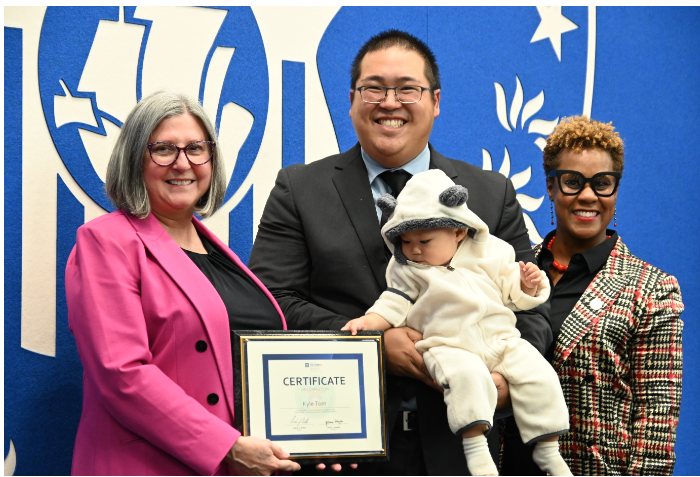
For immigrants, the practical value is straightforward: understanding government is one thing; knowing whom to call, how to communicate effectively and how to build partnerships is another. In Dayton, the city’s 10-week Neighborhood Leadership Institute opens applications for its 2027 class on January 18, with the program beginning March 25.
Classes examine city government, criminal justice, cultural diversity and public speaking, while connecting participants with government officials and community decision-makers. Dayton Neighborhood Leadership Institute
One caution for applicants: the city has confirmed the January opening and March kickoff, but African Metro News could not verify a 2027 application deadline on the current city page. Applicants should therefore register for city updates rather than assume last year’s deadline applies.
In Cleveland, Global Cleveland’s Civic Academy provides a less time-intensive entry point. The free virtual program holds quarterly lunchtime sessions covering voting, government structure, contacting elected officials, attending public meetings and pursuing positions on boards, commissions and neighborhood groups. It welcomes newly naturalized citizens, international community members and others interested in civic life. Global Cleveland Civic Academy

Beyond Ohio, Louisville’s Metro Government offers another immigrant-focused model. Its Global Louisville Leadership Academy is free and aimed at foreign-born leaders and people serving international communities. Training includes city services, citizenship and civic engagement, public safety, courts and leadership development. Applications for the 2027 cohort open in November 2026. Louisville.gov
In the East Coast, the Philadelphia’s Immigrant Leadership Institute, is currently accepting enrollment. The Welcoming Center program helps foreign-born Greater Philadelphia residents develop advocacy, organizing and intercultural leadership skills. Its advanced level focuses on organizing to improve programs, services and policies affecting immigrant communities. Philadelphia Immigrant Leadership Institute

For New Americans considering political leadership New American Leaders’ national Ready to Lead® program takes a different route: preparing immigrants interested in political candidacy through training in messaging, fundraising and campaigning. Its published 2027 schedule includes Fresno, Feb. 26–28; Detroit, April 23–25; Aurora, Colorado, May 21–23; and a National Women’s Training in New York, June 25–26. Final application deadlines range from December 15, 2026, to April 20, 2027, depending on the cohort. New American Leaders See the 2027 Ready to Lead schedule and deadlines
For immigrants accustomed to being discussed in American politics, these programs offer something rather different: opportunities to understand civic institutions, build networks and participate in them.
After all, integration is not merely knowing where City Hall is. Sometimes, it is knowing how to get inside — and what to do once you’re here.