
For millions of Americans, a passport is more than a travel document. It is a ticket to opportunity, a connection to family abroad, and, for many immigrants who have become U.S. citizens, an essential link between two homes.
Now, falling behind on child support could mean losing that privilege.
Under the federal Passport Denial Program, parents certified by their state as owing more than $2,500 in past-due child support can be denied a new U.S. passport or renewal. Federal officials are also expanding enforcement to include the revocation of existing passports in qualifying cases, signaling a tougher approach to collecting delinquent child support.
The program operates through the federal Office of Child Support Enforcement (OCSE), which receives certifications from state child support agencies. Once a person is certified, the information is forwarded to the U.S. Department of State, which may deny or revoke passport privileges until the child support debt is resolved.
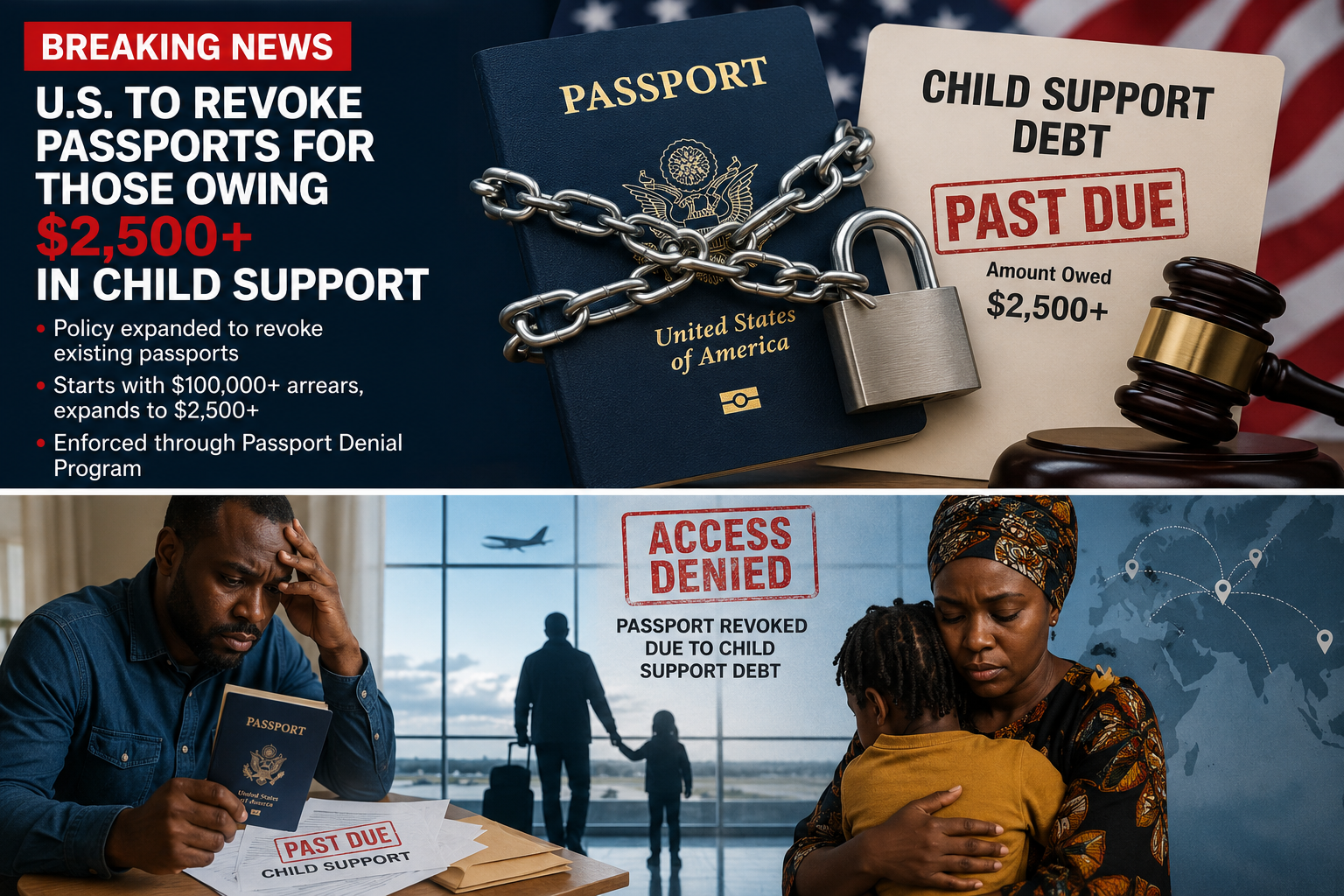
The policy is intended to encourage parents to meet their legal financial obligations to their children. Federal officials argue that the threat of losing international travel privileges has proven to be an effective enforcement tool.
For immigrant communities, however, the consequences may extend well beyond vacations or business trips.
Naturalized U.S. citizens often maintain close ties with relatives overseas. A passport may be needed to attend a funeral, care for an aging parent, participate in family celebrations, or manage business and property interests abroad. Losing that passport can suddenly sever those connections, at least temporarily.
Immigration advocates have expressed concern that globally connected families may feel the effects of the policy more acutely. Although the law applies equally to all U.S. citizens who meet the statutory threshold, immigrant families are often more dependent on international travel because of family, cultural, and economic ties that span continents.
Individuals who satisfy their child support obligations are not automatically removed from the Passport Denial Program. Their state child support agency must notify the federal Office of Child Support Enforcement, which then updates the State Department. Passport applications may be held for up to 90 days while the matter is resolved, and processing resumes only after federal records reflect the release.
If a passport application is denied and an individual is unsure which state certified the debt—or believes the certification was made in error—they must contact the appropriate state child support agency to resolve the issue.
For African and immigrant communities across the United States, the message is clear: if you owe more than $2,500 in court-ordered child support, your passport—and your ability to travel internationally—could be at risk. Before making international travel plans, it may be worth confirming that your child support obligations are current.
A passport may fit in your pocket, but for many families it carries the weight of two worlds.